
Since 2000, Capilano University has designated 28 academic emeritus recipients.
Discover more about them and their outstanding achievements below.
2026 Recipients
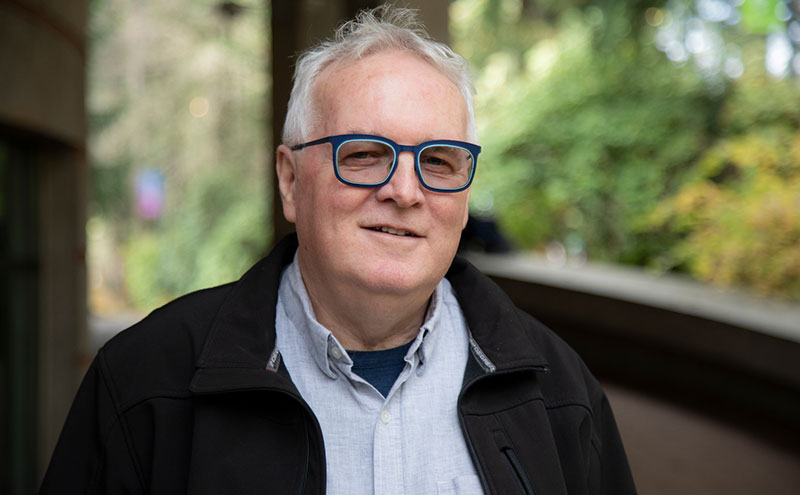
Roy Jantzen
Vibrant Environmental Educator

Roy Jantzen had an extraordinary 25-year career at Capilano University, where he made a lasting impact on students, colleagues and the broader community. A dedicated educator in the School of Tourism Management and the School of Outdoor Recreation Management, Roy taught a wide array of courses spanning outdoor leadership, environmental stewardship, climate change, marine tourism and sustainable development. He served as convenor for both the Wilderness Leadership Certificate and the Global Stewardship Diploma programs, guiding students to develop practical skills, ethical leadership and a deep connection to the natural world.
Roy brought sustainability to the forefront of university life, introducing the UN Sustainable Development Goals and actively supporting initiatives such as EarthWorks, Ecoliteracy and the Howe Sound Field Schools. He contributed to Capilano University’s waste audit and served on the sustainable advisory group, helping shape long-term environmental strategies and policies. His approach was always interdisciplinary, connecting students and faculty across departments and integrating community-based sustainability work into the academic experience.
Throughout his career, Roy combined teaching excellence with scholarly engagement. He authored Active Vancouver (2015) and Wildlife Weekends in Southern British Columbia (2025), and his dedication to students and curriculum innovation was recognized with multiple teaching awards, including the 2022 Capilano University Teaching Excellence Award, the RISE Teaching Excellence Award in 2023 and the Luminosity Award from the Capilano University Alumni Association.
Beyond the classroom, Roy designed and led environmental and experiential learning programs across British Columbia, Yukon and internationally. He founded Nature Venture Tours, a company he envisioned during his practicum in the Capilano College Outdoor Recreation Management Program. NVT's design was based on the curriculum he experienced as a student, bringing conservation, research, and education together in immersive experiences for older adults. His mentorship, scholarship and leadership have inspired countless students and colleagues, leaving a profound and enduring legacy at Capilano University and in the field of sustainable tourism and outdoor education.
Janet Waters, PhD
Academic Changemaker
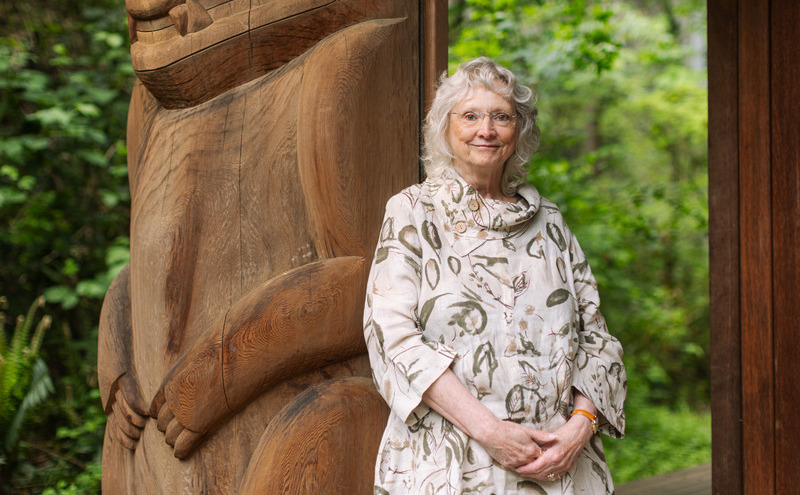
Dr. Janet Waters is a clinical counsellor, researcher and educator whose distinguished career spans more than three decades at Capilano University and over 40 years in clinical practice and community service. Joining Capilano in 1987, Janet taught across multiple disciplines, including psychology, commerce, music therapy and liberal studies, before focusing her work in psychology. Over the course of her career, she inspired generations of students through courses on psychotherapy, personality, cognition, relationships and organizational behaviour, earning a reputation as a thoughtful mentor and dedicated teacher committed to student success and wellbeing.
Janet’s most significant institutional contribution was the development of Capilano University’s Applied Bachelor of Arts in Psychology with an Honours option. Beginning in 2018, she chaired the psychology program development committee, leading extensive consultations with students and faculty and authoring the proposal that resulted in the program’s approval in 2021. The program reflects Janet’s vision, embedding themes of mental health, sustainability and decolonization and fostering meaningful engagement with Indigenous knowledge through relationships with Squamish Elders. Since its launch, hundreds of students have progressed through the degree and honours streams.
Throughout her career, Janet also served the university through numerous leadership roles, including chair of the psychology department, convenor of the commerce program, interim chair of the Research Ethics Board and treasurer of the Capilano Faculty Association. Her research examined topics ranging from imagery and emotion in the arts to workplace stress and wellbeing, organizational climate and the impacts of technology on learning.
Alongside her academic work, Janet maintained a long-standing clinical counselling practice and continues to serve her community through pastoral counselling, mentorship and public lectures. Her career reflects a remarkable commitment to scholarship, service and compassion, leaving a lasting and meaningful legacy at Capilano University.
Recipient archive
David Kirk
David Kirk, a proud member of the Tzeachten First Nation (Stó:lō Nation), is an educator, Indigenous advocate and visionary leader. His 17-year career at Capilano University transformed the institution's approach to Indigenous education, reconciliation and decolonization. David's contributions include the development of innovative programs, extensive advocacy for Indigenous students and fostering a campus culture of inclusion and understanding.
Holding a Bachelor of Social Work and a master's degree in education from the University of British Columbia, David has balanced Indigenous teachings from Elders with his extensive academic expertise. His work, rooted in community-based collaboration, continues to influence educational frameworks both at Capilano University and across British Columbia.
Today, David serves as the dean of curriculum and pedagogy at Vancouver Community College, where he continues to champion Indigenization, curriculum development and reconciliation within post-secondary education.
Bob Muckle
Bob Muckle served Capilano University with distinction for 35 years, shaping the institution's Anthropology and Archaeology programs and mentoring generations of students. Known for his deep commitment to experiential learning, he created and directed the Seymour Valley Community Archaeology Project – one of the few community-based field schools in British Columbia – bridging the gap between academic knowledge and public engagement.
A prolific author, Bob has written several influential textbooks, including The First Nations of British Columbia: An Anthropological Overview and Introducing Archaeology, widely used in classrooms across North America. His work has significantly advanced public and academic understanding of British Columbia's Indigenous history, Japanese Canadian heritage, and contemporary archaeological practices.
Bob was an active leader at Capilano University, serving as chair of Social Sciences and contributing to more than 30 university committees. His dedication to Indigenizing and decolonizing education and fostering inclusive scholarship leaves a lasting legacy.
Nationally and internationally respected, Bob is recognized for his ongoing research on modern archaeology, including studies on COVID-19, contemporary trash and skate parks. His former students – affectionately dubbed "Mucklettes" – now comprise a substantial portion of the province's consulting archaeologists.
Even in retirement, Bob continues to write, publish, and represent Capilano University through his scholarly and public work. His career is a testament to the power of education, community engagement and lifelong learning.
Sheila Ross
Sheila Ross is a geographer, educator and author whose 32-year career at Capilano University has shaped the field of physical geography and the institution's academic development. Her contributions include developing pivotal second-year physical geography courses, fostering place-based learning pedagogy, and publishing a textbook, Weather and Climate – An Introduction. Of note, this textbook is the first textbook on the topic that is Canadian from inception.
During her tenure, Sheila played an active leadership role within the University and beyond, serving as convenor for the geography department, budget coordinator for the School of Social Sciences, and a member of multiple committees, including the Registrar's Advisory Committee. Sheila's teaching and research extended into public engagement, where she raised awareness of pressing environmental issues, particularly climate change, through lectures and accessible scholarship.
Even in retirement, Sheila remains dedicated to advancing physical geography education. At the beginning of 2024, she published the third edition of Weather and Climate. Her current projects include completing a new introductory Canadian physical geography textbook, exploring broader non-fiction writing, and documenting natural landscapes through her travels. Sheila's expertise and enduring contributions continue to benefit the academic community.
Crystal Hurdle
Crystal Hurdle earned her bachelor's (honours) and master's degrees in English literature from the University of Victoria and holds a Secondary School Teaching Certificate as well as a Diploma in Applied Linguistics. She taught English at CapU from 1985 until her retirement in 2020.
Crystal engaged hundreds of students, from those in EAP and remedial writing through to those in her creative writing, academic writing and literature classes. She created English 292, Writing for Children (along with KinderText, a reading series); English 209, literary analysis, poetry of Ted Hughes and Sylvia Plath; and English 290, Creative Writing, poetry, with an emphasis on the same poets.
She served as the English department coordinator and was a member of the Capilano Press Society Board for The Capilano Review. Additionally, Crystal was actively involved as chair and member of the School of Humanities Evaluation and Paid Educational Leave committees. She also taught at the University of Victoria, UBC and worked at SFU as the technical writing director for the School of Engineering. Throughout her career, Crystal facilitated instructional skills workshops at CapU.
She is author of the poetry books, After Ted & Sylvia and Sick Witch, and Teacher’s Pets, a novel in verse. Her poetry and prose were published in several journals, including Canadian Literature, The Literary Review of Canada, Event, Bogg, Vallum, Transverse, Ars Medica and The Dalhousie Review. She was guest poet and only featured speaker from Canada, respectively, at two different international Sylvia Plath symposia, at Oxford and Bloomington.
Since retirement, Crystal has served as a writing mentor to students through the Writers Union of Canada, Canadian Artists Network, League of Canadian Poets, and at Silver Harbour Seniors' Centre. She's given poetry readings and continues to write both poetry and novels.
Graham Fane
A 30-year member of the Faculty of Business and Professional Studies, Fane began as an instructor and later served as the dean overseeing the School of Business, paralegal studies and communications departments.
During his years at CapU, he created 400-level curricula and authored two textbooks on strategic planning and contemporary business management.
Through his leadership, CapU developed and introduced new degrees in the paralegal and communications programs, and became the first Canadian university accredited by the Northwest Commission of Colleges and Universities.
In addition to his work with CapU, Fane consulting practice in strategic management has provided training and guidance to over 10,000 business managers.
Nancy McMaster
Nancy McMaster was a Canadian pioneer in the field of music therapy. She is the co-founder of Canada's first music therapy training program in 1976 at Capilano University.
Until her retirement in 2022, McMaster was a champion for the program, taking it from a two-year diploma to a bachelor's degree in 1990, marking CapU's first degree offering.
As a founding director and board member for the Music Therapy Association of BC, McMaster was instrumental in establishing national undergraduate curriculum standards in the early years of the organization.
Beyond academics, McMaster was a musician who played and recorded music, and was a member of several choral ensembles in her community.
A candidate was not selected for 2023.
Leonard George
Leonard George is a psychologist, writer, educator and broadcaster. After earning his doctorate at the University of Western Ontario, he worked for 19 years in a variety of clinical settings, specializing in assessing and treating psychotic disorders, seizure disorders, acute and chronic pain, and traumas such as severe burns and animal maulings.
He then worked at Capilano University for 15 years in the psychology and music therapy departments, where he taught a range of courses including those that he developed himself. Leonard was chair of the psychology department and chair of the School of Social Sciences, leading through uncertainty, change and new developments with dedication, grace and optimism.
Twelve years ago, he launched Capilano Universe, a gift of ongoing education and community-building with public libraries and an enterprise that is still strong today.
Leonard has authored two books and dozens of chapters and articles on a range of topics and is co-editing the forthcoming text, Explorations in Music and Esotericism. He has given lectures and seminars around the globe; most recently, he presented online workshops and lectures through the Open Center in New York on topics of esotericism, the soul and ancient healing around the world in the context of psychology and history.
Today, Leonard continues his pursuit of passion and search for adventure which has brought him to Ontario's Niagara region, where he is beginning the next chapter of his life.
Noga Gayle
Noga Gayle taught for 32 years as an instructor of sociology and women's studies at Capilano University. She is a widely published scholar in the fields of sociological theory, sociology of the Third World, media and society and women's studies – all through a social justice lens.
Gayle introduced students to perspectives from the intersection of gender, race, class and ideology that would inspire their own critical scholarship and social action.
Her publications have contributed to broadening academic literature through compelling analyses of racism as an ideology and furthered the sociological dialogue with thoughts and ideas that continue to resonate, both within academia and throughout the wider world.
Gayle passionately advocated for the development of sociology offerings at the University. She was a valued voice on various provincial post-secondary committees that helped to establish both the rigorous scholarship and the excellence in teaching for which Capilano University is increasingly known.
Since retiring in 2009, Gayle has continued to provide transformational leadership by way of her involvement with the University Women's Club and the Women's International League for Peace and Freedom.
She is a vocal advocate for the rights of Indigenous and other marginalized women, and exemplifies how upholding values of inclusion, equality and respect for human rights can benefit individuals, communities and the greater good.
Jenny Penberthy
Jenny Penberthy taught for 24 years in the English department at Capilano University. A widely-published and renowned scholar in the field of modern poetry and poetics, she made crucial editorial and critical contributions to the study and appreciation of American poet Lorine Niedecker while remaining deeply engaged in every facet of life at the university.
Dr. Penberthy served on numerous committees, directed the Leon and Thea Koerner Foundation Lecture Series, expanded the operations of the Writing Centre, founded CUE Books in 2008, and edited The Capilano Review for six years while maintaining its national reputation as a lively magazine of experimental literary and visual arts and ensuring the magazine survived in its transition to off-campus production in 2015. In her capacity of TCR editor, she pioneered Sacred Space: The Tom Cone Festival of New Plays, a hugely successful annual festival of innovative short plays.
Since retiring in 2016, Dr. Penberthy has remained dedicated to both her scholarship and the continued vitality of TCR. In the year of her retirement, Flood Editions in Chicago published her book The Art of Language: Selected Essays of Kenneth Cox, and the collection Poetry and Praxis "After" Objectivism from the University of Iowa Press featured her essay on Lorine Niedecker and Lisa Robertson. She is working on a collection of letters by Lorine Niedecker and a history of Fulcrum Press.
Still tirelessly committed to funding and programming initiatives as Board Chair of the Capilano Review Contemporary Arts Society, Jenny Penberthy's presence and imprint on our local arts communities remains profoundly felt.
Pierre Coupey
Pierre Coupey's 41-year teaching career began at Capilano College in 1970. He was responsible for establishing creative writing within the English department and was the first instructor to introduce Canadian literature into the College curriculum. An award-winning visual artist, Coupey's work can be found in private collections and galleries in Canada and abroad.
"Pierre Coupey was, and continues to be, a tireless advocate of Canadian literature," says Capilano University President Paul Dangerfield. "As one of the founding editors of The Capilano Review, Pierre brought many emerging and renowned Canadian writers to greater public attention. He is both a remarkable talent in his own right and a tremendous credit to Capilano University."
Dorinda Neave
Dorinda Neave is an art historian, art curator and author who taught art history at Capilano University for 27 years.
Neave received a Bachelor of Arts from Manchester University and a post-graduate certificate in Education from Keele University before completing a Master of Arts at the University of Victoria.
Teaching has always been one of Neave's passions and throughout her time at Capilano University she enriched the classroom experience through innovative courses, content, experiential learning and cross-disciplinary approaches.
Neave's articles have been published in a variety of scholarly journals such as Art Journal and Woman's Art Journal. Her most recent article, "Portrait of the 16th Century Zen Buddhist Nun Shun'oku-Sōei, Daiji-in Temple, Kyoto: A Tale of Collaboration and Discovery" will be published in the June 2018 edition of the Virginia Review of Asian Studies. Her research takes her to many countries in Asia and Europe, and in the fall of 2017 she was a visiting scholar at Nichibunken (International Research Centre for Japanese Studies) in Kyoto.
Neave was lead author on the award-winning textbook Asian Art published in 2014. Asian Art has been successfully adopted as the textbook for Asian art history courses in many colleges and universities, including Capilano University. In 2016, Asian Art was awarded the Franklin R. Buchanan Prize for an outstanding curriculum publication on Asia that reflects current scholarship, presents innovative teaching strategies and reaches a wide audience.
Throughout her 27 years at Capilano University, Neave contributed to the Women's Studies committee, Indigenizing the Academy committee and the Aichi Gakusen Exchange Scholarship committee. For many years, Neave was chair of the Aichi Gakusen committee, which sent three CapU students annually to Japan for four to six months to study Japanese language and culture.
Dorinda Neave retired from Capilano University in 2016 and is currently writing a book on the 15th century Japanese Zen Buddhist monk-artist Sesshū Tōyō.
Mark Battersby
Mark Battersby was a member of the Philosophy department at Capilano University for 38 years until his retirement in 2013.
He served as coordinator of the Philosophy department on two occasions and chair of Humanities. He led the College as the first chair of the Education Council (which preceded the Senate), served as the first faculty representative on the College Board and served twice as president of the Faculty Association.
Battersby was a respected and dedicated teacher, hailed by students for his passion for philosophy and his compassion for them as learners. He was considered ahead of his time when he led the introduction of critical thinking courses to Capilano. He developed and implemented the first computer program to teach critical thinking at Cap and founded and chaired an organization that led to critical thinking being included in B.C.'s K-12 curriculum.
Battersby was also a prescient thought leader on learning outcomes, working with the Centre for Curriculum to develop and promote province-wide curriculum reform. Battersby has written two books on critical thinking and philosophy: Is that a Fact: A field guide to evaluating statistical and scientific information; and (with Sharon Bailin, PhD) Reason in the Balance. He has also authored many articles published in peer-reviewed journals. Battersby continues to educate others as a keynote speaker at conferences around the world.
Colleagues describe Battersby as always being prepared and razor sharp in his analysis, as well as gracious and humorous. He has led numerous philosophy cafés in North Vancouver and Vancouver.
Mark Battersby and his wife of 46 years have six children and eight grandchildren all of whom are central to his life.
Marion Haythorne
Marion Haythorne was a dedicated faculty member for Capilano University for more than 30 years. She retired in 2014. She has been a strong advocate for student success in the classroom and the community. This extended beyond her office hours to include accessing university and community resources to aid students' access to health care, counselling support services and career opportunities. She also exemplifies organizational citizenship in her initiation of mentorship for onboarding faculty by offering direct counsel/feedback, invitations to attend her classroom and advocacy for fair distribution of workloads within policy guidelines. Haythorne welcomed every new faculty member with the same ease, smile and encouragement. If you were nervous before a class, Haythorne would gladly and generously put you at ease.
Haythorne spearheaded and developed courses for the Legal Administrative Assistant (LAA) online certificate program offered through the Applied Business Technology Online Collaborative. This enabled students who were working full- or part-time, or otherwise engaged, to work on their LAA certification from home. This also created increased opportunities for faculty members. She was committed to building networks with our local business and legal communities to create hands-on mentorship opportunities for students attending practicum placements in the LAA program. Haythorne singlehandedly set up and arranged for scholarships from major Vancouver law firms to be awarded on an annual basis to top-ranking LAA students.
Haythorne has served for more than 25 years on committees, boards and councils. She took on several leadership roles, both within Capilano University and in the community at large. These included coordinating the Applied Business Department and the School of Legal Studies. She also served on the Education Council and became vice chair of Senate under the new University Act. She led significant initiatives in the University, including a strategic enrolment planning process, and the Parents as Career Counselors program. She also served in the role of student affairs manager, which brought another opportunity for her to support, advocate for and guide students.
Haythorne is a dynamic and motivational speaker and continues to advocate for Capilano University in a variety of ways since she retired. She has been on the Capilano University Foundation Board, is a representative on the Capilano University Alumni Association Board of Directors and is a regular attendee of Capilano Blues Events. She is a former long-term board member of North Shore Community Resources and a chair of the Citizen Advisory Committee at Alouette Correctional Centre.
Stanley Greenspoon
Stanley (Stan) Greenspoon was a member of the Physics department from 1988–2014 at Capilano University. He served as convenor of physics, as coordinator of chemistry, geology and physics, and from 2006-2014, as chair of the Division of Pure and Applied Sciences. During his career at Capilano University, it became a common sight for members of the community to see Greenspoon carrying demonstration equipment across the campus to his classes. This enrichment of his classes with hands-on demonstrations has been much appreciated by Greenspoon's students over the years and has contributed to his excellent reputation as an instructor. Greenspoon taught second-year laboratory courses, for which he also developed most of the experiments and wrote the lab manuals. Greenspoon also developed the experiments for the laboratory version of the astronomy course, which he introduced to Capilano University and instructed from its inception for many years.
In service to the British Columbia post-secondary physics community, Greenspoon served as chair of the BC Physics and Astronomy Articulation Committee from 2005-2014. Greenspoon's capable leadership of the Committee and chairing of the meetings reflected well on Capilano University.
Greenspoon has a PhD and M.Sc. from the University of Waterloo. He has published contributions in the Canadian Journal of Physics and Physical Review, and he has presented in many conferences including the American Association of Physics Teachers and Canadian Association of Physicists. During his time at CapU, he contributed to many non-instructional activities such as the Deans' Lecture Series, Capilano Universe, Board of Governors, and professional development days. Since retirement, he has continued to contribute to the community and represent Capilano University in volunteer outreach activities with the Royal Astronomical Society of Canada, the One-to-One Literacy Society and North Vancouver high schools.
Liz Moffitt
Liz Moffitt is internationally renowned for the depth of her kindness, intuition, wisdom, clear thinking, communication and generosity in the professional community of Music Therapy, Gestalt Therapy and Guided Imagery and Music.
Soon after training as a mature student in Music Therapy at Capilano then-College, Moffitt joined the faculty of the Music Therapy program at Capilano College in 1979. She immediately became an active member of the Canadian Association for Music Therapy (CAMT) Board. She also served on the educational committee, helping establish the early standards and competencies for Canadian Music Therapy training programs. Her vision, passion and commitment was also instrumental in the transformation of the Music Therapy Diploma program into the Bachelor of Music Therapy, Capilano College's first bachelor's degree through BC Open University, in 1990.
Moffitt was an outstanding teacher, demonstrating excellence in the classroom, both in her role as program coordinator and in her involvement with the Capilano College community. Moffitt was also active in the life of the College and, later, the University. She participated on many committees and was a vocal advocate for Music Therapy at the dean's advisory committee level. At the heart of her participation at Capilano was her keen desire for students to succeed.
At the local level, Moffitt's vision and commitment was instrumental in establishing the first Guided Imagery and Music training in Canada. In 1989, she brought the method to Vancouver, subsequently becoming the first Canadian primary trainer. Moffitt was instrumental in the creation of the Guided Imagery and Music Post-Baccalaureate Certificate program at Capilano University. Unfortunately, the program was discontinued in 2013.
Moffitt has maintained an active private practice that combines Music Therapy, Gestalt and Guided Imagery and Music, as well as being part of the faculty of the Gestalt Institute in Vancouver.
John Sayre
John Sayre has been an outstanding colleague, friend and ambassador for Capilano University ever since his appointment in 1968. He has demonstrated excellence in all aspects of academic career.
For more than 37 years, Sayre's teaching motivated and challenged thousands of students, inspiring them to develop a wide range of interests. He was equally at ease teaching introductory courses to business students as teaching the complexities of intermediate microeconomics to commerce students. The students all shared a common respect and admiration for Sayre as a teacher and a friend.
Sayre co-authored four textbooks all currently in use at Capilano University. The two principles of economics texts have been adopted by universities and colleges throughout Canada and have built a reputation as the most readable economics texts published in North America. They are now in their eighth editions.
Sayre has had an enormous influence on the Social Science division as both division chair and budget coordinator. He was responsible for setting up its Commerce and Labour Studies programs.
Sayre's contribution to the University community has been equally inspiring. He was instrumental in the formation of the Faculty Association, as well as its first president. He has been a guest speaker on campus on several occasions. Sayre has left an enormous legacy. Without him, Capilano University would not be the outstanding institution that it has become.
Dr. Brian White
Brian White founded the School of Tourism Management and the School of Outdoor Recreation Management. His inspired leadership created a dynamic, connected and respected array of tourism and outdoor recreation programming integral to Capilano University to this day.
From 1972, when he created and taught the first class of the outdoor recreation department, until his retirement in 2008, White led the formation of at least eight successful programs including the Bachelor of Tourism Management in 1995–one of the first baccalaureate degrees offered from Capilano then-College.
White is regarded as a pre-eminent leader of tourism and hospitality education in British Columbia and Canada. He was recognized as the Canadian tourism industry's Educator of the Year in 2004 and was awarded the BC Tourism Industry's 2009 William Van Horne Visionary Award for leadership in educational programming and commitment to innovative teaching.
He was also the senior human resource policy advisor for the World Travel and Tourism Council and housed a resource centre at Capilano College, and has conducted numerous international tourism-related projects.
In addition to his wide array of accomplishments, Brian always has time for people and is a true teacher and inspiration. He cultivates loyalty and demonstrates a constant and inspired caring for students and for his colleagues that transcends institutions or boundaries.
Doug Loblaw
Douglas Loblaw has been actively involved in post-secondary education and business consulting for over 40 years in which time he had the foresight to develop a joint business degree with British Columbia Open University (BCOU), which eventually led to Capilano School of Business offering its own Bachelor of Business Administration. During his time at Capilano, Doug was a leader in many initiatives that brought students into the "real world" of business, including a store front consulting unit on Lonsdale where Cap students helped out developing strategies and tactics for North Shore businesses. He led the department as both coordinator and chair and tirelessly took on many university-wide responsibilities.
Doug studied at the University of Toronto and began his career in marketing under the guidance of his grandfather, T.P. Loblaw, founder of LOBLAW Grocerterias in Toronto 1919, Canada's first self-service grocery chain. By the time he retired, Doug had taught over 6000 classes and 18 000 students over the three campuses.
Linn Teetzel
Linn Teetzel was a member of the Capilano faculty from 1993 to 2009. In that time, she demonstrated outstanding service to the University and the local government sector in British Columbia through development of highly respected programs for working professionals and establishment of Capilano's Public Administration department. There are graduates of Linn's programs in virtually every municipality in British Columbia. Always aware of the changing needs in municipal administration in the province Linn continually up-dated and added new curriculum that brought leaders back year after year.
In 2008, the importance of Linn's contribution was recognized by the Province when she received the Lieutenant Governor's Silver medal for Excellence in Public Service.
We thank Linn for her continued service to both Capilano University and the province of British Columbia.
Bob Bagshaw
Bob Bagshaw always said he was "building a cadre of young Canadians to really take advantage of British Columbia's unique geographic positioning in its proximately to Asia." Over a 20 year period, the McRae Institute produced graduates who now populate the embassies and multinational offices across Asia and Latin America. Bob was the man who single-handedly set up the networks and recruited students and employers who could work together for the advancement of Canadian interests in Asia. The McRae Institute won national awards for excellence and innovation and raised the profile of Capilano. Next month, Bob will be honoured with a lifetime achievement award from the BC Council of International Education.
Karin Vickers
Karin was a master teacher dedicated to her students and always available. A real leader in the School of Business and the Applied Business Technology departments, she set up Accounting First Aid with extra tutorials and according to a colleague "made a huge contribution to other faculty members by offering assistance and the benefit of her many years of teaching experience." In the School of Business, her colleagues awarded her a teaching excellence award. As a single mother, Karin inspired the mature students as she had raised nine children, completed her degree, attained her CGA accounting designation and completed a marathon at the age of 50.
Dr. Keith Wade
The nomination document for Dr. Keith Wade was 19 pages long – with an offer of more if we needed it. For more than 33 years for Capilano and for the Vancouver Botanical Gardens Association, Keith taught students of all ages about the biogeography and natural history here and throughout the world. Keith's passion for the natural environment of the Pacific Northwest and his dedication to the dissemination of knowledge of our region based on the science of botany shines through. This is reflected over and over in the books, articles, talks and TV presentation he has given in the community in addition to his outstanding and dedicated classroom work.
Josephine Jungic
Taught for 35 years in the Art History department at Capilano was given an emeritus professor designation earlier this year.
Over the years, Josephine established an excellent reputation for teaching and scholarship in addition to dedicated service to the department, university and community. Each year her courses were fully enrolled with a steady stream of students on the wait-list. These were signed in despite the additional work that an overload entailed.
Throughout her teaching career she taught a variety of first and second year courses, both during the day and evenings, to ensure that motivated students were able to complete two years of Art History courses at Cap. This strategy proved successful as students transferring to other universities, such as UBC and the University of Victoria, performed exceptionally well in the discipline. Many of Josephine's students have gone on to obtain BA's and higher in Art History and have become professors at various institutions both in Canada and abroad.
Josephine has a very impressive record of publications and her articles have been published in such prestigious art journals as Journal of the Warburg and Courtauld Institutes and Gazette des Beaux-Arts. Her articles have been reprinted in scholarly texts and Josephine is currently writing a ground-breaking book on the subject of Giuliano de' Medici in relation to the art of Leonardo, Raphael and Michelangelo. As the Art History department's senior member, Josephine focused on building the best Art History department in British Columbia. She achieved this by attracting outstanding faculty – a practice that continues today.
Crawford Kilian
Crawford Kilian was one of the first faculty members at Capilano – establishing the communications department and remaining coordinator for over 30 years. At the same time, he was an inspiring instructor known for his leadership, mentorship and expertise. Students also appreciated his exceptional teaching and advising. Beyond Capilano, Crawford is a writer, spokesperson and concerned citizen. In retirement Crawford continues as an active citizen and prolific writer.
- Reid Gilbert - December 1, 2009
- Elizabeth Young - March 6, 2007
- Malcolm Fitz-Earle - February 7, 2003
- Bill Schermbrucker - May 4, 2000